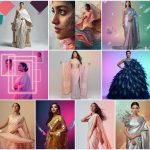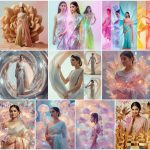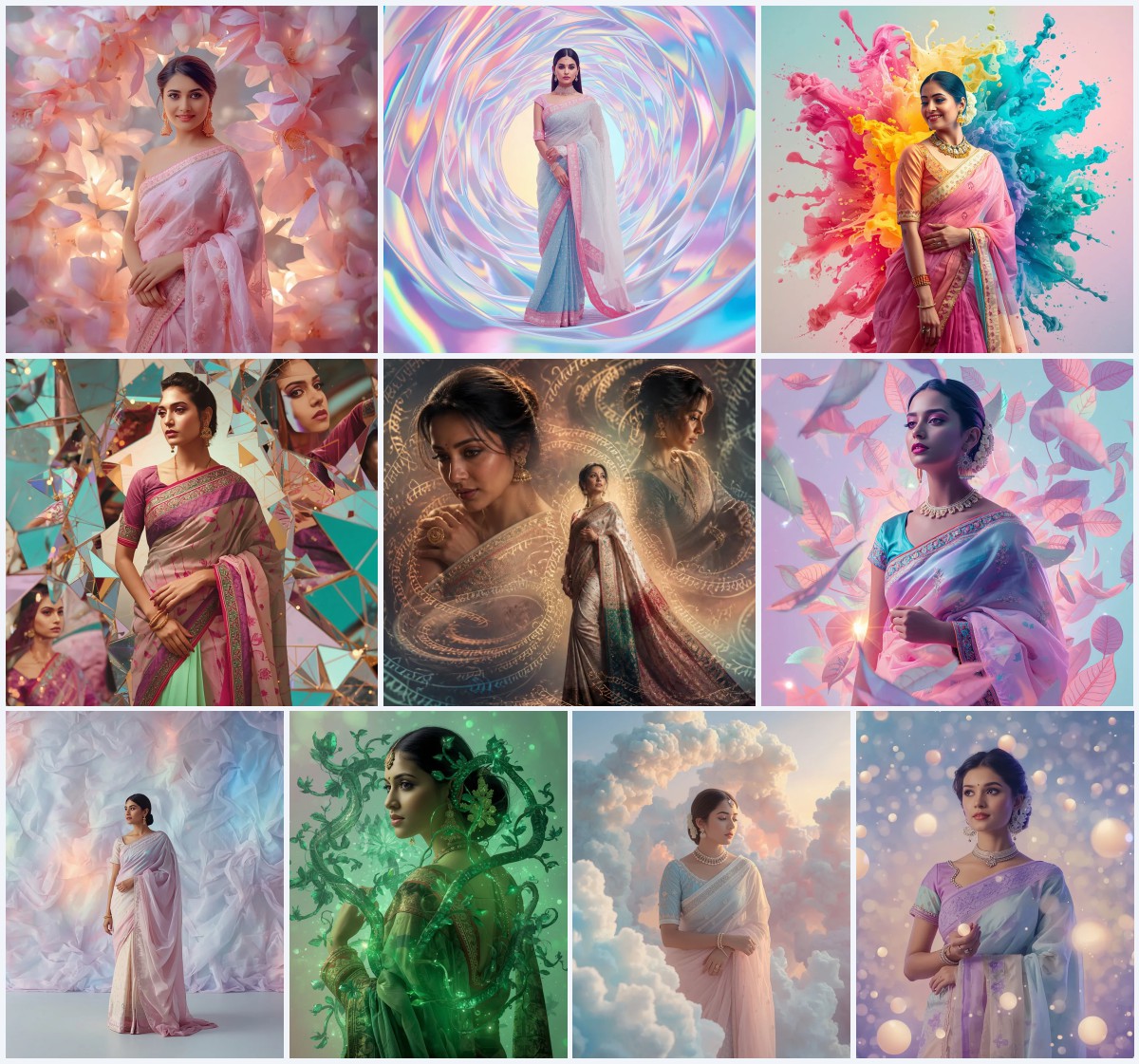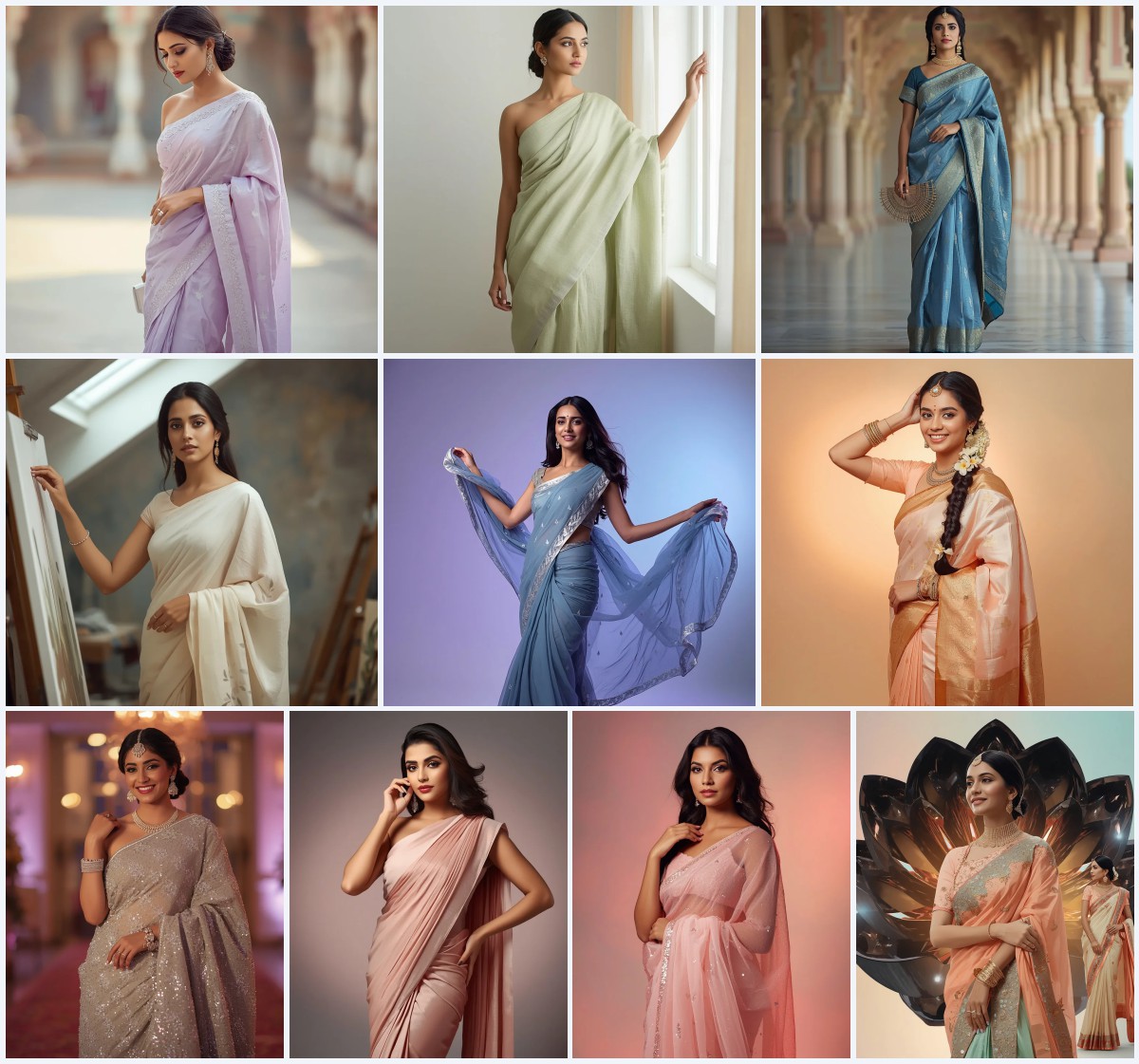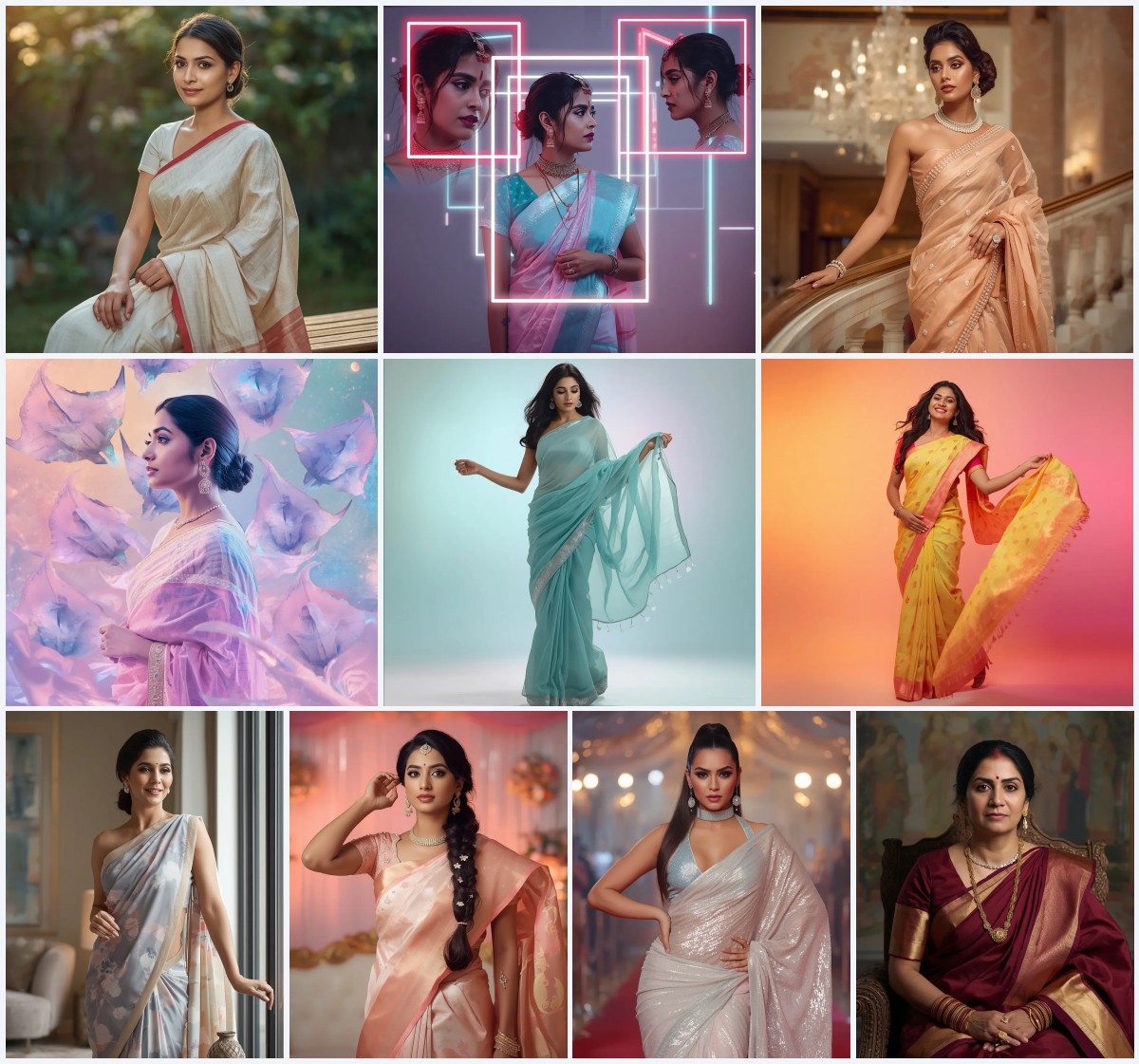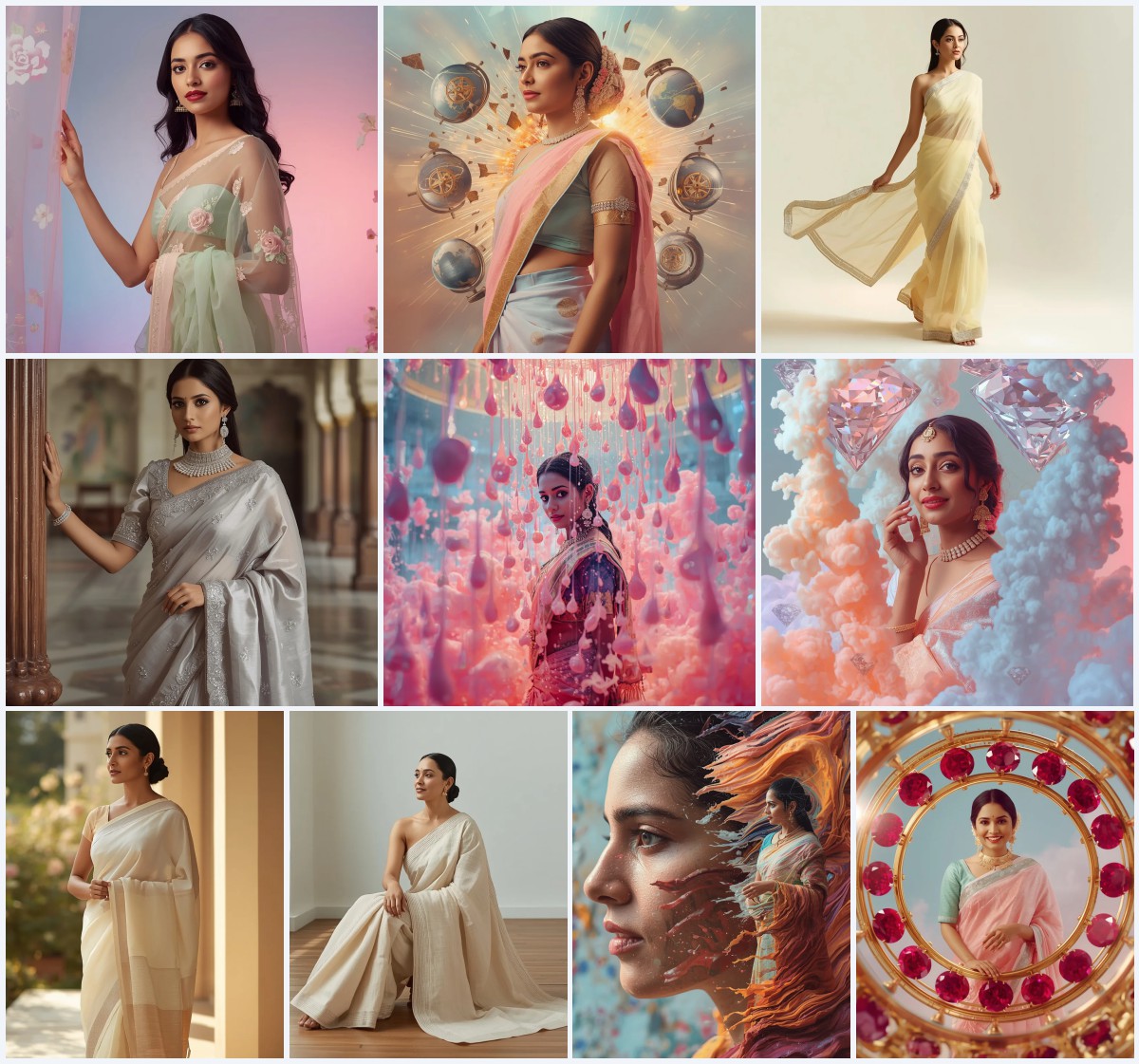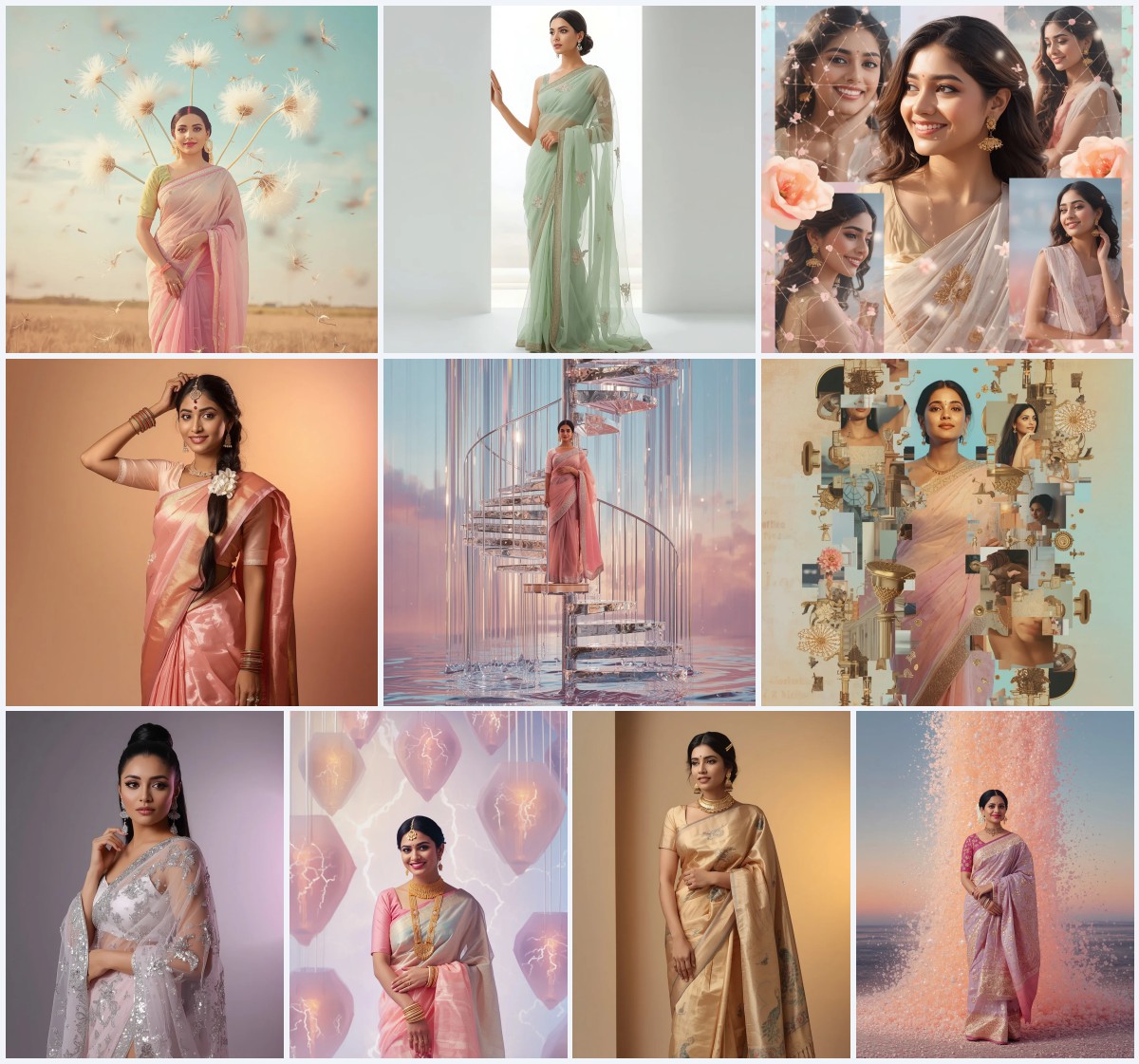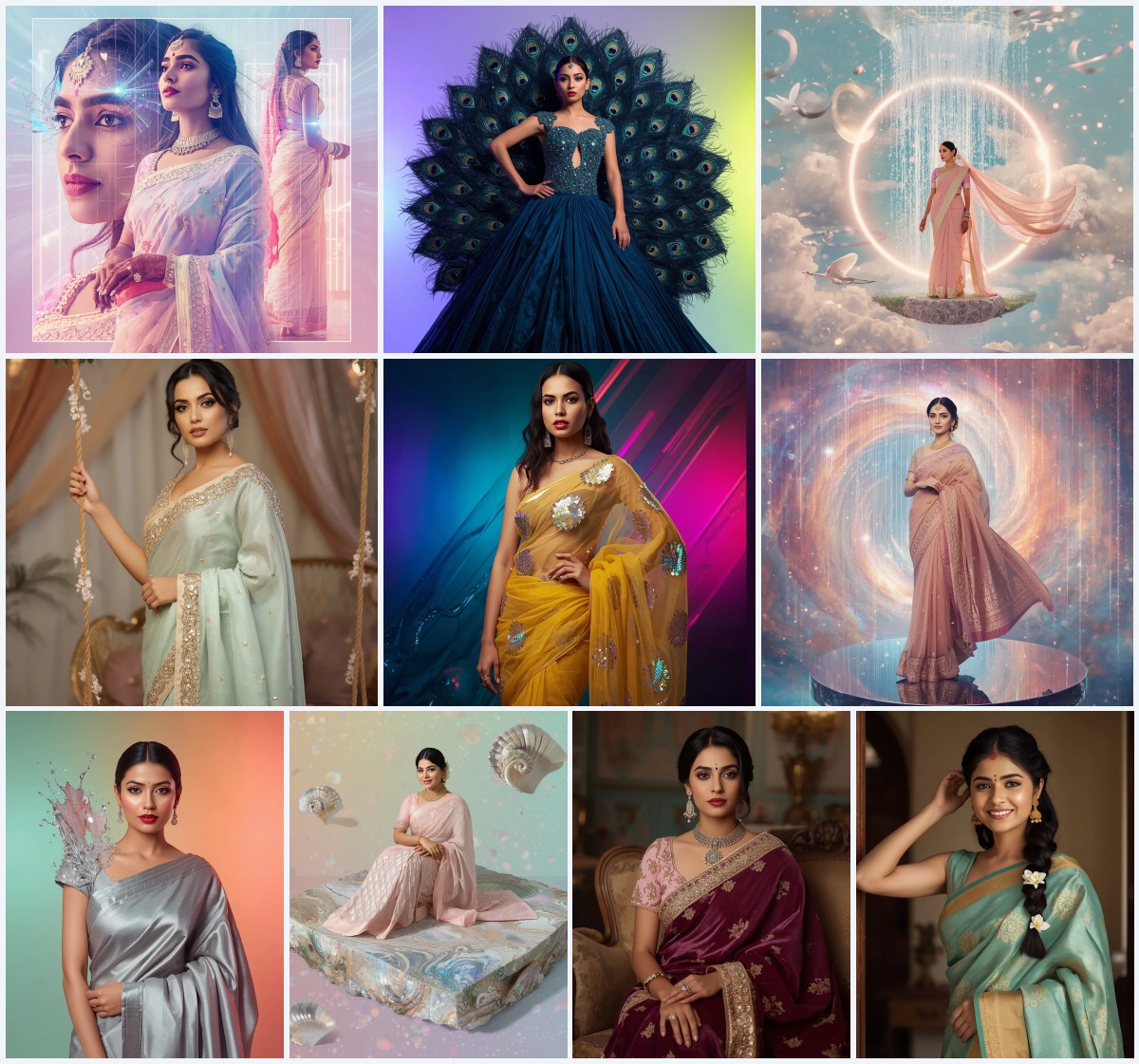
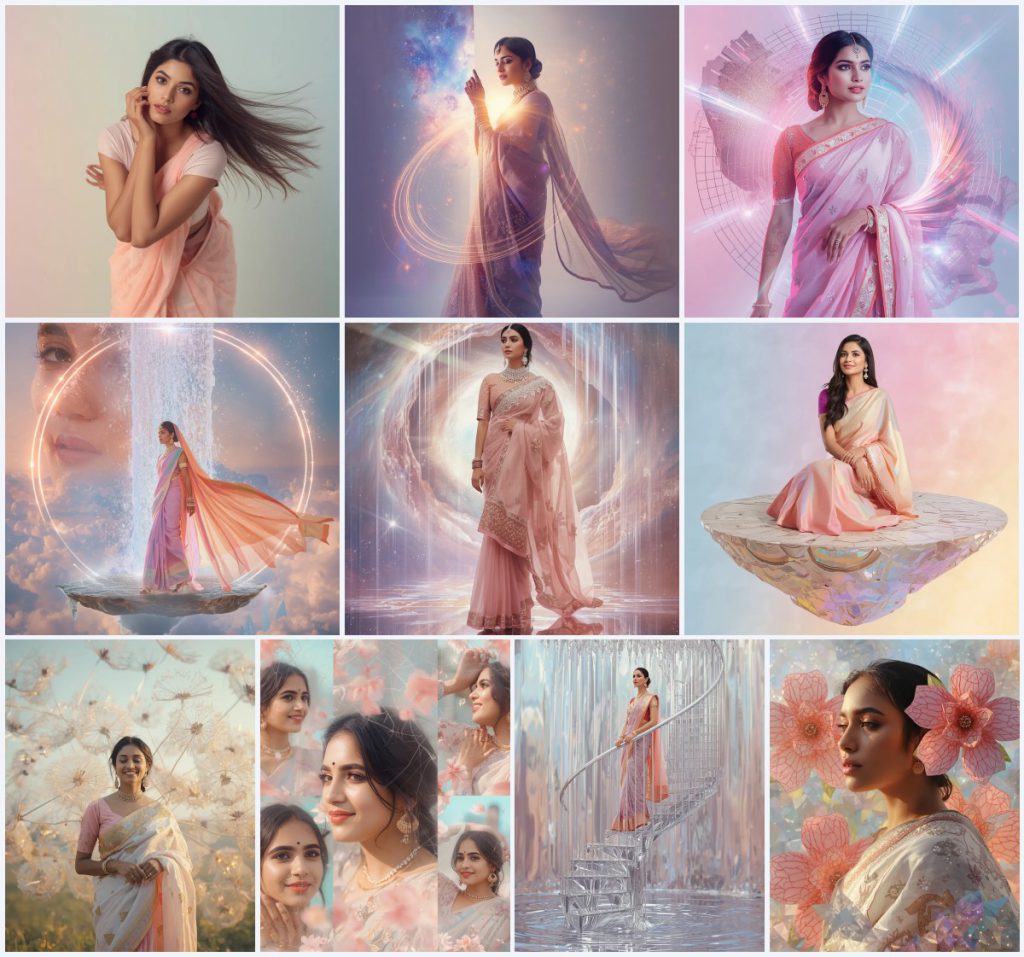


Unlock the secrets of generating breathtaking traditional Indian wedding attire images with our curated collection of advanced, highly detailed AI prompts.
The world of digital fashion is undergoing a massive revolution, and traditional Indian attire is leading the charge. Creating a realistic, culturally accurate, and visually stunning image of a wedding saree requires precise terminology and creative direction. These prompts are designed to help you generate high-quality images that capture the luxurious textures, vibrant colors, and intricate details of classic South Asian wedding wear.
Whether you are a digital artist, a social media influencer, or a fashion designer looking for mood board inspiration, these prompts provide clear guidance. By focusing on specific fabric drapes, traditional embroideries, and surreal backgrounds, you can produce professional-grade visuals that stand out on any digital platform. We have carefully structured these prompts to balance classic elegance with modern, high-concept artistic styles.
In this comprehensive guide, we will explore the best prompts for creating stunning saree visuals. You will learn how to leverage cosmic patterns, holographic grids, and realistic silk textures to achieve masterpiece-level outputs. Let us dive into the ultimate collection of prompts that will elevate your digital design game to the next level.
What Are Wedding Saree Prompts?
Wedding Saree Prompts are highly descriptive text commands used to guide artificial intelligence image generators in creating visuals of women dressed in traditional Indian wedding sarees. Unlike basic text prompts, these advanced configurations include precise details about fabric type, embroidery styles, posture, lighting, and background settings. This ensures that the generated image accurately represents the complexity and grandeur of traditional Indian bridal wear.
Traditional sarees, especially those worn at weddings, feature intricate craftsmanship such as gold borders, beadwork, and delicate folds. A standard prompt might produce a generic, flat-looking garment. However, by incorporating rich terms like Banarasi silk, gold zari borders, and gota patti embroidery, you instruct the AI model to render deep textures, realistic fabric weight, and lifelike reflections. These prompts serve as the creative blueprint for generating high-fidelity cultural portraits.
Why Wedding Saree Prompts Is Trending
The trend of generating traditional South Asian attire via AI has spiked dramatically due to the global rise of digital fashion and social media aesthetics. Users on platforms like Instagram and Pinterest are constantly searching for unique, high-concept visuals that blend traditional heritage with futuristic or dreamlike environments. Wedding Saree Prompts allow creators to build stunning, high-definition concepts that would be incredibly expensive and time-consuming to shoot in real life.
Furthermore, the fusion of traditional Indian wedding fashion with surrealist art styles—such as cosmic nebula vortexes, liquid platinum structures, and holographic portals—has captured the imagination of digital artists worldwide. This trend bridges the gap between cultural appreciation and cutting-edge technology, making it a highly sought-after category for content creators, photo editors, and AI enthusiasts alike.
Popular Styles You Can Create
With our curated prompts, you can explore a wide variety of breathtaking visual styles. Here are some of the most popular aesthetic directions you can achieve:
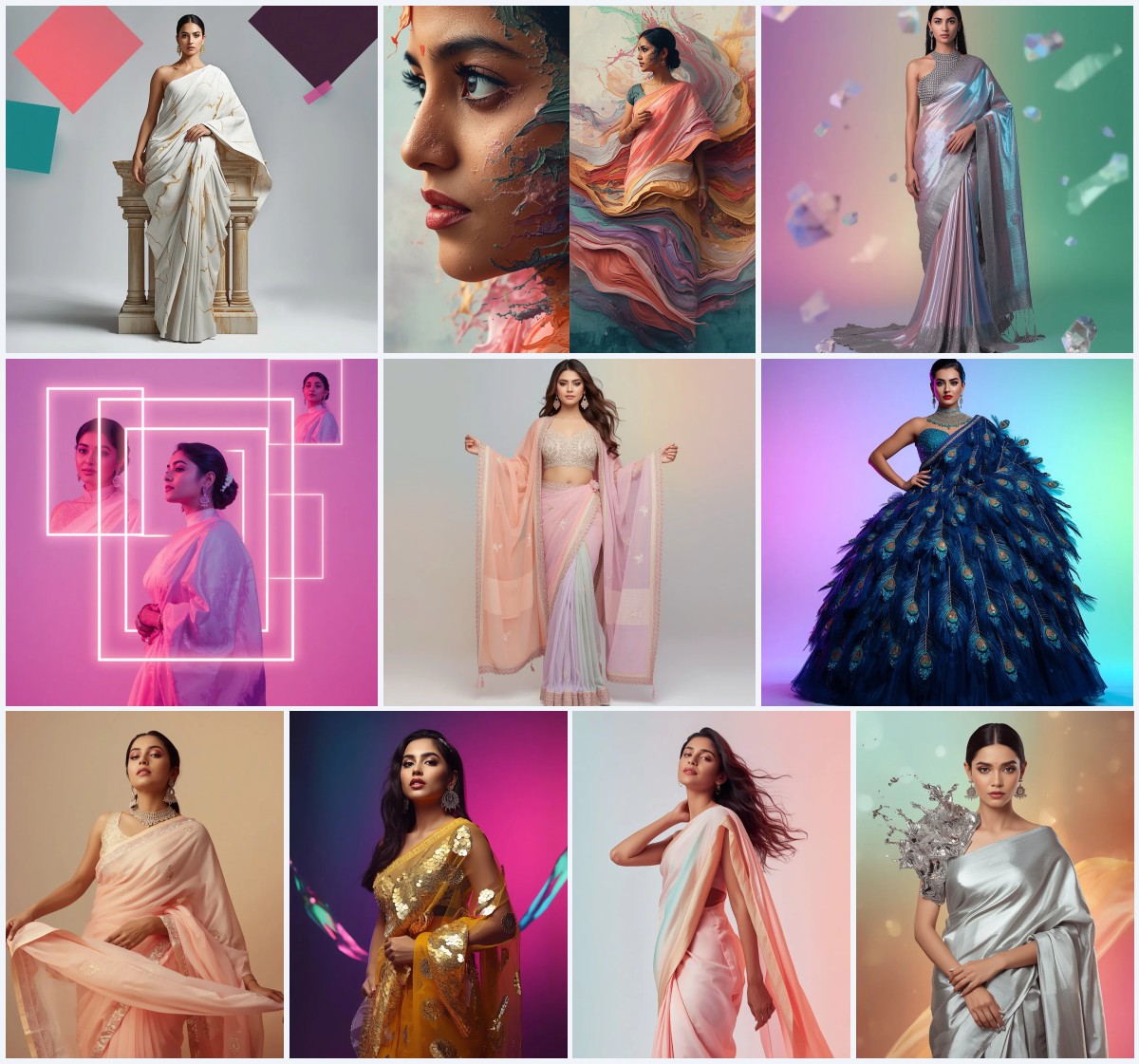
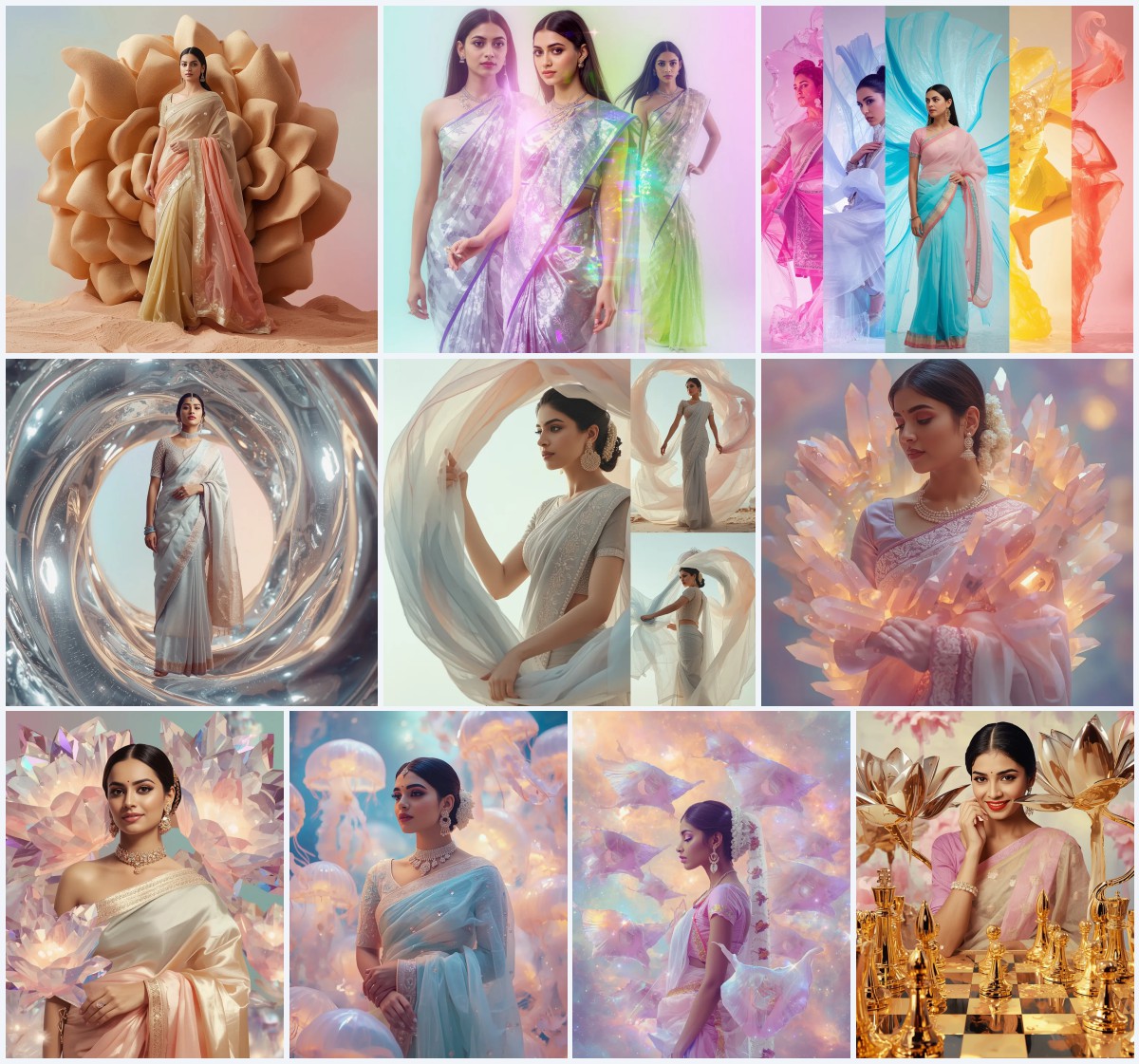
- Dreamy Pastel Aesthetic: Soft blush pink, lavender, and peach tones combined with minimal makeup, glowing skin, and serene, diffused natural lighting.
- Cosmic and Celestial Fusion: Dramatic collages where the saree pallu explodes into a cosmic galaxy burst, surrounded by stardust, nebula vortexes, and orbiting energy rings.
- Futuristic Holographic Grids: Advanced compositions featuring holographic portals, metallic particle rain, and collapsing dimensional grids over traditional jewelry.
- Luxurious Metallic and Fluid Art: Striking visual contrasts featuring liquid platinum staircases, abalone shell plates, and spun white-gold dandelion seeds.
- Geometric and Data Algorithms: Modern digital art styles where intricate geometric flowers made of pure data code unfold across a digital grid around the subject.
How to Use Wedding Saree Prompts
Using these prompts is simple, but achieving the absolute best results requires a structured approach. Follow these steps to generate your own stunning saree images:
- Select your favorite prompt from our curated list of wedding saree concepts.
- Copy the complete text of the prompt to your clipboard, ensuring you include all the descriptive details.
- Open your preferred AI image generator interface on your web browser or application.
- Paste the copied prompt directly into the input text box of the generator.
- Adjust the aspect ratio settings (such as 9:16 for mobile screens or 16:9 for widescreen displays) depending on your intended platform.
- Click the generate button and wait for the AI tool to render the initial set of images.
- Review the generated outputs, select the best image, and use upscaling features to enhance the resolution and detail.
What Kind of Base Photo Works Best?
If you are planning to use these prompts for face-swapping, photo editing, or reference-based generations, choosing the right base photo is crucial. The ideal base photo should feature a high-resolution, front-facing portrait with clear, even lighting across the subject's face. Shadows should be minimal to prevent the AI from generating weird facial distortions or unnatural skin textures.
Additionally, a neutral or soft expression works best, as it allows the AI to seamlessly blend the facial features with the dreamy, serene, or dramatic expressions specified in the prompts. Ensure that the hair is kept relatively neat or styled in a way that does not block the main facial features, making it easier for the generator to render the traditional jewelry, such as the maang tikka, flawlessly.
Which AI Tools Deliver the Best Results?
To get the most realistic textures, vibrant colors, and intricate details from these prompts, you need to use high-performing AI image generators. Below is a comparison of the top tools where you can paste these prompts to achieve stunning results:
| AI Tool | Best For | Key Strength |
|---|---|---|
| Midjourney | Photorealistic textures & cinematic lighting | Excellent rendering of silk, gold embroidery, and complex drapes |
| Flux | Anatomical accuracy & crisp details | Perfect for rendering hands, jewelry, and complex collage grids |
| Leonardo | Creative styling & rapid prototyping | Great control over pastel gradients and fantasy elements |
| ChatGPT | Prompt refinement & DALL-E integration | Easy to modify prompts and generate instant visual concepts |
| Gemini | Fast conceptualization | Quick generation of diverse artistic and cultural styles |
Pro Tips
To truly elevate your generations, keep these professional tips in mind when pasting your prompts into your chosen generator. First, always specify the fabric material explicitly; mentioning "luxurious handwoven Banarasi silk" or "sheer net" forces the engine to calculate realistic light reflections. Second, describe the physical drapes and folds using phrases like "natural realistic folds" and "subtle drape physics" to avoid stiff, unnatural-looking clothing.
Additionally, don't forget to detail the traditional jewelry. Mentioning items like "maang tikka," "intricate henna patterns," and "heavy gold zari borders" adds a layer of cultural authenticity that makes the image look like a genuine photograph. Lastly, use cinematic lighting terms like "diffused lighting," "luminous data glows," or "warm pastel gradients" to create depth and eliminate flat, artificial-looking backgrounds.
Common Issues and Quick Fixes
Generating complex traditional wear can sometimes result in rendering glitches. Here are the most common issues you might encounter and how to fix them quickly:
| Common Issue | Root Cause | Quick Fix / Solution |
|---|---|---|
| Distorted hands and fingers | AI struggling with hand anatomy near drapes | Inpaint the hands or use a negative prompt like "deformed hands, extra fingers" |
| Unnatural, stiff saree folds | Lack of physical movement descriptions | Add "flowing pallu with wind movement and realistic drape physics" to the text |
| Blurry jewelry or embroidery | Low rendering resolution or generic terms | Specify "intricate gota patti pearl embroidery, sharp focus, 8k resolution" |
Frequently Asked Questions
Can I use these wedding saree prompts for commercial design projects?
Yes, you can copy these prompts and paste them into advanced AI image generators to create high-resolution designs for mood boards, client presentations, or social media marketing.
Which fabric details should I include to make the saree look highly realistic?
To achieve maximum realism, specify exact traditional textures such as handwoven Banarasi silk, heavy gold zari borders, intricate gota patti pearl embroidery, and delicate sequin shimmers.
How can I fix distorted pleats or folds in the generated AI image?
If the drape looks unnatural, you can re-run the prompt with terms like 'natural realistic folds', 'pleats with wind movement', and 'subtle drape physics' to guide the AI renderer.
Conclusion
Creating stunning, culturally authentic images of traditional Indian wedding sarees is now easier than ever with the power of artificial intelligence. By using our highly detailed prompts, you can bypass generic designs and generate masterpieces filled with rich textures, breathtaking lighting, and surreal artistic backgrounds. Copy your favorite prompt, paste it into tools like Midjourney, Flux, or Leonardo, and watch your creative vision come to life. Happy generating!